

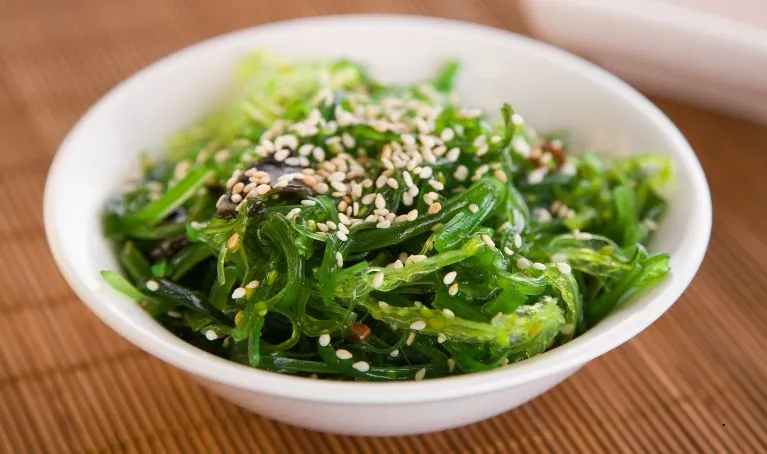
Seaweed salad is one of those foods that looks indulgent but is actually remarkably light in calories and rich in nutrients. Whether you are ordering it at a sushi restaurant, buying it from a grocery store, or making it at home, understanding exactly what is in it helps you make smart choices for your health goals.
This guide covers the full picture: calories per serving at every portion size, the complete macro breakdown, vitamins and minerals, how sodium factors in, weight loss considerations, and how restaurant seaweed salad compares to a homemade version.
What Is Seaweed Salad?
Seaweed salad is most commonly made from wakame, a type of edible seaweed widely used in Japanese cuisine. The salad is typically seasoned with sesame oil, soy sauce or tamari, rice vinegar, a small amount of sugar, sesame seeds, and occasionally chili flakes or ginger. The result is a savoury, slightly sweet, and tangy dish that is served cold as an appetiser or side dish at most sushi restaurants.
Other types of seaweed used in salads include hijiki, nori, and arame, each with slightly different textures, flavours, and nutritional profiles. The most common variety sold pre-made in grocery stores is goma wakame, which is the bright green, lightly dressed wakame salad that is familiar to most people.
The vivid green colour of commercial seaweed salad often raises questions. Wakame is naturally a muted olive-green or brownish colour when dried. The bright green you see in most restaurant and store versions comes from food colouring added during the rehydration process. This is standard practice and does not affect nutritional value, but it is worth knowing if you are buying packaged versions.
Seaweed Salad Calories Per Serving
Calories vary depending on the type of seaweed, the dressing used, and the serving size. The table below gives a clear overview across the most common serving sizes and types.
| Serving Size | Wakame Salad | Hijiki Salad | Nori Salad | Goma Wakame (Store-bought) |
|---|---|---|---|---|
| Per 100g | 70–90 kcal | 80–100 kcal | 60–80 kcal | 90–120 kcal |
| ½ Cup (~75g) | 50–70 kcal | 60–75 kcal | 45–60 kcal | 70–90 kcal |
| 1 Cup (~150g) | 100–140 kcal | 120–150 kcal | 90–120 kcal | 130–180 kcal |
A standard restaurant appetiser portion of seaweed salad is approximately one cup, which puts most orders in the 100 to 160 calorie range depending on how heavily dressed it is. Store-bought versions tend to be slightly higher in calories because they often contain more sesame oil and added sugar than homemade preparations.
Full Nutrition Facts Per 100g
The following table reflects average values for a standard dressed wakame seaweed salad, the most common type.
| Nutrient | Amount | % Daily Value |
|---|---|---|
| ⚡ Energy | ||
| Calories | 70–90 kcal |
3–5%
|
| 🍚 Macronutrients | ||
| Total Fat | 3–5g |
4–7%
|
| Saturated Fat | 0.4–0.8g |
2–4%
|
| Total Carbohydrates | 7–12g |
3–4%
|
| Sugars | 2–5g |
—
|
| Dietary Fibre ✓ High | 3–6g |
11–21%
|
| Protein | 2–4g |
4–8%
|
| 💎 Minerals | ||
| Sodium ⚠ Watch | 400–700mg |
17–30%
|
| Calcium | 50–100mg |
5–10%
|
| Iron | 1.5–2.2mg |
8–12%
|
| Magnesium | 25–40mg |
6–10%
|
| Iodine ⭐ Very High | 100–400mcg+ |
100%+
|
| 🌿 Vitamins | ||
| Vitamin A | 80–160mcg |
10–20%
|
| Vitamin C | 3–7mg |
4–8%
|
| Vitamin K | 15–25mcg |
15–25%
|
| Folate (B9) | 32–48mcg |
8–12%
|
Percent daily values are based on a 2,000 calorie diet. Iodine content is particularly notable and varies widely depending on the type and origin of seaweed used.
Complete Macro Breakdown: Protein, Carbs, Fat, and Fibre
Protein in Seaweed Salad
Seaweed salad contains approximately 2 to 4 grams of protein per 100g serving. This is modest compared to dedicated protein sources, but it is meaningful for a salad. Wakame specifically contains a good profile of essential amino acids for a plant-based food, and the protein density per calorie is relatively high.
For a complete meal, pairing seaweed salad with a protein-rich main such as grilled salmon, tofu, or edamame ensures you get a satisfying and nutritionally balanced plate.
Carbohydrates in Seaweed Salad
Seaweed salad contains approximately 7 to 12 grams of carbohydrates per 100g. Of this, 3 to 6 grams are dietary fibre, meaning the net carbs (total carbs minus fibre) are approximately 4 to 6 grams per 100g.
The carbohydrate content of seaweed itself is primarily from complex polysaccharides, which digest slowly and do not spike blood sugar sharply. The added sugars in the dressing (typically 2 to 5 grams per 100g in commercially prepared versions) are the main source of simple sugars in the salad.
Fat in Seaweed Salad
Most of the fat in seaweed salad comes from sesame oil in the dressing. Sesame oil is a source of unsaturated fatty acids, which are considered heart-healthy fats. A 100g serving of dressed seaweed salad contains approximately 3 to 5 grams of total fat, most of which is unsaturated.
Seaweed itself contains very little fat. If you make seaweed salad at home and reduce the sesame oil, you can bring the fat content down to under 1 gram per 100g.
Fibre in Seaweed Salad
Fibre is one of seaweed salad’s most valuable nutritional qualities. Wakame and other edible seaweeds contain several types of dietary fibre including alginate, fucoidans, and laminarin, which are not found in land-based vegetables. These specific fibres act as prebiotics, feeding beneficial gut bacteria, and are associated with improved digestive health and cholesterol management.
A 100g serving provides approximately 3 to 6 grams of fibre, which represents 11 to 21 percent of the recommended daily intake. A one-cup serving can provide up to 8 to 9 grams of fibre depending on the seaweed variety used.
Vitamins and Minerals in Seaweed Salad
Seaweed is nutritionally dense in a way that is unusual for such a low-calorie food. Here are the key micronutrients and why they matter.
Iodine is the standout nutrient. Seaweed is one of the richest dietary sources of iodine available. Iodine is essential for the production of thyroid hormones, which regulate metabolism, energy levels, and growth. A single one-cup serving of seaweed salad can provide well over 100 percent of the recommended daily intake of iodine, and sometimes several times that amount depending on the seaweed variety and its growing location. This is both a benefit and a point of caution, discussed below.
Vitamin K is important for blood clotting and bone health. Seaweed salad provides approximately 15 to 25 percent of the daily requirement per 100g, making it a meaningful contributor alongside other green vegetables.
Folate is a B vitamin essential for cell division and particularly important during pregnancy. Wakame is a good plant-based source of folate, with around 8 to 12 percent of the daily requirement per serving.
Iron supports oxygen transport in the blood. Seaweed provides a form of non-haem iron. Consuming seaweed salad alongside a vitamin C source such as a lemon dressing or citrus enhances iron absorption.
Magnesium is involved in over 300 enzymatic reactions in the body including muscle function and blood pressure regulation. Seaweed salad contributes 6 to 10 percent of the daily requirement per serving.
Calcium supports bone density. Seaweed salad provides around 5 to 10 percent of the daily requirement per 100g.
Is Seaweed Salad Good for Weight Loss?
Seaweed salad is genuinely diet-friendly for several reasons, not just because it is low in calories.
The fibre content, particularly the alginate and fucoidans unique to seaweed, slows gastric emptying. This means seaweed salad keeps you feeling full for longer relative to its calorie count. Research published in Appetite found that alginate consumption reduced overall calorie intake at subsequent meals compared to control conditions.
Fucoxanthin, a pigment found in brown seaweeds including wakame, has attracted research attention as a potential metabolic support compound. Some studies suggest it may support fat metabolism and reduce visceral fat accumulation, though most research so far has been in animal models or small human trials. The quantities found in a typical serving of seaweed salad may be modest, but the overall dietary pattern of regular seaweed consumption is associated with lower rates of obesity in Japanese populations.
At 80 to 160 calories per one-cup serving, seaweed salad fits easily into most calorie-controlled eating plans. It also provides substantial fibre, meaningful micronutrients, and genuine flavour satisfaction, which reduces the likelihood of wanting something else immediately after eating it. If you are building a low-calorie meal around seaweed salad, pairing it with other light sides like a small portion of boiled potatoes keeps the total calorie count manageable while adding satisfying volume.
For the lowest calorie version: Make it at home using rehydrated wakame, rice vinegar, low-sodium soy sauce or tamari, a teaspoon rather than a tablespoon of sesame oil, and a pinch of sesame seeds. This brings the calorie count to approximately 60 to 80 calories per cup.
How Sodium Affects Seaweed Salad’s Health Value
Sodium is the one genuine nutritional concern with seaweed salad, particularly in restaurant and store-bought versions. A 100g serving of commercially prepared goma wakame typically contains 400 to 700mg of sodium, primarily from soy sauce. A generous restaurant portion can approach or exceed 1,000mg of sodium in a single appetiser serving.
The recommended maximum daily sodium intake is 2,300mg according to the Dietary Guidelines for Americans, and the American Heart Association recommends an ideal limit of 1,500mg for most adults. A large restaurant seaweed salad appetiser could account for 40 to 60 percent of the ideal daily sodium allowance on its own.
For people without blood pressure concerns who eat a generally low-sodium diet, this is manageable in context. For people managing hypertension or who have been advised to limit sodium, store-bought and restaurant seaweed salad should be consumed in moderation or replaced with a low-sodium homemade version using tamari and reducing the quantity used.
At home, replacing regular soy sauce with low-sodium tamari immediately cuts sodium by approximately 30 to 40 percent without a significant difference in flavour. You can also add a splash of rice vinegar to boost flavour and reduce reliance on soy sauce altogether, keeping both sodium and calories lower.
Seaweed Salad at Restaurants vs. Homemade: Calorie Comparison
| Version | Calories | Sodium | Fat | Best For |
|---|---|---|---|---|
| 🍽️ Restaurant | 130–180 kcal | 600–1,000mg | 5–8g | Occasional treat |
| 🛒 Store-bought | 120–160 kcal | 500–800mg | 4–7g | Convenient option |
| 🏠 Homemade (Standard) | 80–120 kcal | 300–500mg | 2–5g | Daily balanced diet |
| ✅ Homemade (Light) | 60–80 kcal | 150–250mg | 1–2g | Weight loss / low sodium |
Restaurant portions are typically more generous than the one-cup standard and are usually dressed more heavily. If you are tracking calories carefully, a restaurant seaweed salad appetiser may be closer to 150 to 200 calories depending on portion size and the establishment’s recipe. Asking for dressing on the side gives you control.
Health Benefits of Seaweed Salad
Seaweed salad delivers meaningful health benefits alongside its low calorie count.
Thyroid support. The high iodine content makes seaweed salad one of the most effective dietary sources of thyroid support available. People who avoid iodised salt or who do not eat much seafood may benefit particularly from including seaweed in their diet regularly.
Digestive health. The prebiotic fibre in wakame feeds beneficial gut bacteria and supports regular bowel movements. Alginates in seaweed also have a gentle gel-forming effect in the digestive tract that may help moderate the absorption of fats and sugars.
Anti-inflammatory properties. Fucoidan, a compound found in several edible seaweeds, has demonstrated anti-inflammatory properties in research settings. Regular consumption of wakame is associated with lower levels of inflammatory markers in epidemiological studies.
Cardiovascular support. The alginates in seaweed have been shown to bind cholesterol in the digestive tract and reduce LDL cholesterol absorption. The omega-3 fatty acids present in small amounts in seaweed also contribute to a heart-friendly nutritional profile.
Skin health. The combination of antioxidants, vitamins, and minerals in seaweed including vitamins A, C, and E, as well as fucoidan and astaxanthin, supports skin hydration, collagen production, and protection against oxidative stress.
A Note on Iodine: Too Much Can Be a Problem Too
Because iodine content is so high in seaweed, it is worth noting that excessive iodine intake can also disrupt thyroid function in susceptible individuals. The tolerable upper intake level for iodine set by the National Institutes of Health is 1,100mcg per day for adults. Large portions of high-iodine seaweeds consumed daily could approach or exceed this in some cases.
For most people eating seaweed salad as an occasional side dish, this is not a concern. People with thyroid conditions, however, should discuss seaweed intake with their doctor before making it a daily habit. Pregnant women should also discuss iodine intake with their midwife or obstetrician, as both too little and too much iodine during pregnancy carries risks.
Frequently Asked Questions
How many calories in one cup of seaweed salad?
One cup of seaweed salad contains approximately 100 to 160 calories depending on the type of seaweed and dressing used. Restaurant versions tend toward the higher end, homemade versions can be as low as 60 to 80 calories per cup.
Is seaweed salad low in calories?
Yes. Seaweed salad is considered a low-calorie food, providing 70 to 90 calories per 100g for a standard dressed preparation, making it one of the lighter appetizer options at a sushi restaurant.
Does seaweed salad have protein?
Yes. Seaweed salad contains approximately 2 to 4 grams of protein per 100g serving. This is modest but meaningful for a salad, and seaweed has a relatively high protein-to-calorie ratio compared to most vegetables.
Is the seaweed salad at sushi restaurants healthy?
Generally yes, with one main caveat: the sodium content. Restaurant seaweed salad provides valuable fibre, iodine, vitamins, and antioxidants at a low calorie count. However, a single portion can contain 600 to 1,000mg of sodium, which is significant if you are managing blood pressure or following a low-sodium diet.
Is seaweed salad keto-friendly?
With net carbs of approximately 4 to 6 grams per 100g, seaweed salad can fit into a ketogenic diet in moderate portions. A half-cup serving contains roughly 2 to 3 grams of net carbs. Check labels on store-bought versions as added sugar in the dressing varies.
Is seaweed salad gluten-free?
Seaweed itself is naturally gluten-free. However, the soy sauce used in most seaweed salad dressings contains wheat. If you have coeliac disease or gluten intolerance, look for versions made with tamari (a gluten-free soy sauce alternative) or make your own at home using certified gluten-free tamari.
Does seaweed salad help with weight loss?
It can be a helpful addition to a weight loss diet. It is low in calories, high in filling fibre, and provides substantial micronutrients without contributing significantly to daily calorie totals. The prebiotic fibre may also support gut health, which emerging research links to improved metabolic function.
Final Word
Seaweed salad is a nutritionally impressive food for its calorie count. At 80 to 160 calories per cup depending on preparation, it delivers meaningful fibre, iodine, vitamins, and antioxidants that make it worth including in a balanced diet regularly. The main thing to watch is sodium in store-bought and restaurant versions. If you are managing sodium intake, making it at home with low-sodium tamari and a light hand with sesame oil is a straightforward way to get all the benefits without the salt load.
For the best nutritional value, pair seaweed salad with a lean protein and a variety of colourful vegetables for a balanced, satisfying meal that keeps calories reasonable without sacrificing nutrition. If you are comparing light snack and side dish options for a calorie-conscious diet, the soda crackers calorie guide is another useful reference for low-calorie accompaniments.