

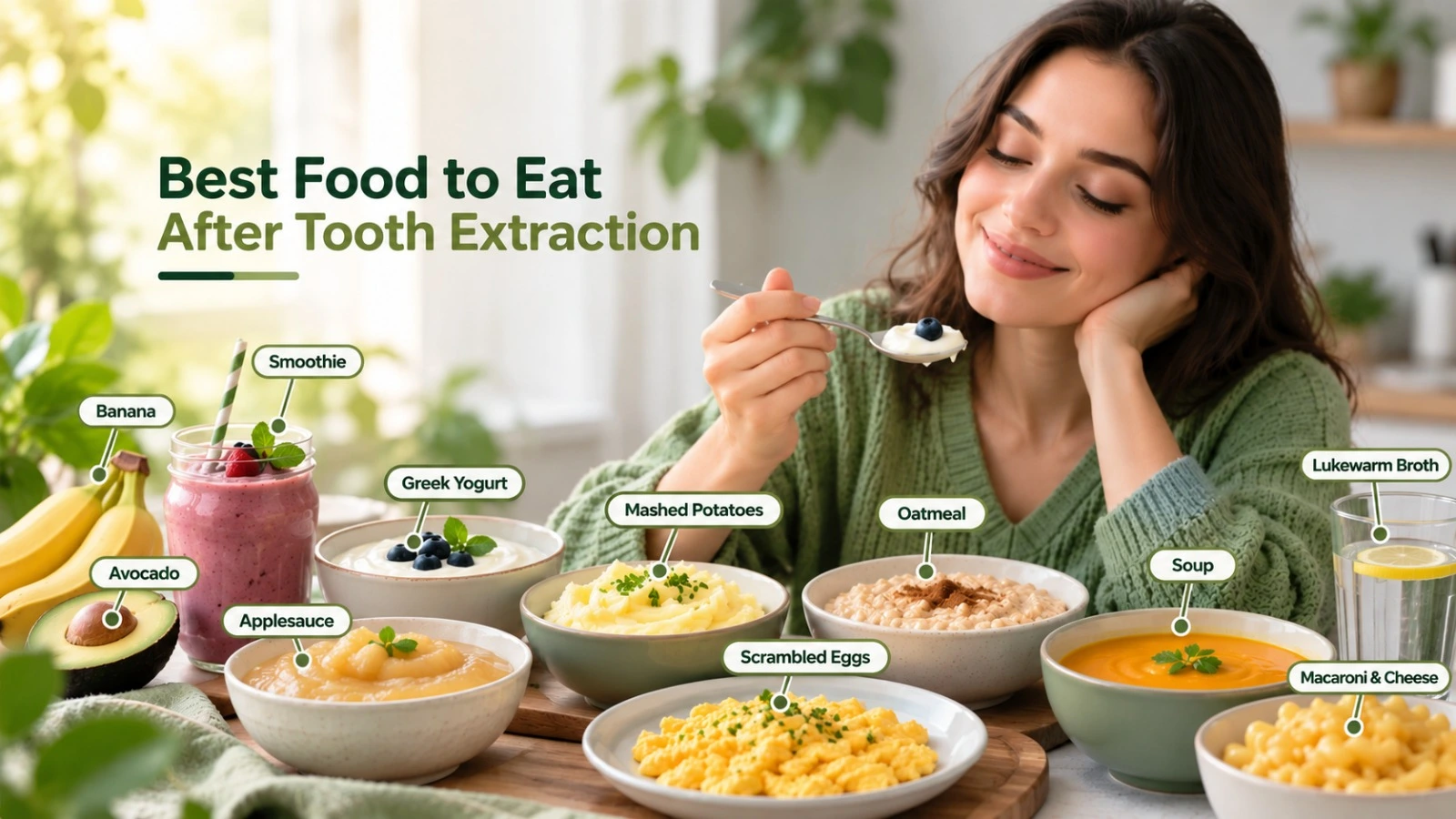
The best food to eat after tooth extraction is soft, mild, and easy to chew, such as yogurt, mashed potatoes, scrambled eggs, applesauce, oatmeal, soft pasta, and blended soups.
For the first few days, protect the extraction site by avoiding hard, crunchy, spicy, very hot, sticky, and sharp foods.
After a tooth is removed, eating can feel surprisingly difficult. Your mouth may be sore, your jaw may feel stiff, and you may worry that one wrong bite could disturb the extraction site.
The good news is that you do not have to survive on soup alone.
There are plenty of nutritious foods to eat after tooth extraction, including soft proteins, dairy foods, cooked vegetables, ripe fruits, eggs, pasta, oatmeal, smoothies, and other easy-to-eat meals.
The exact diet depends on the type of extraction, how your mouth is healing, and the instructions from your dentist or oral surgeon. The guidance below is general information, not a substitute for your own post-operative instructions.
When Can You Eat After Tooth Extraction?
In most cases, you should wait until the numbness from the anesthetic has worn off before eating solid food so you do not accidentally bite your cheek, tongue, or lip.
Your dentist may give you a specific waiting period based on the procedure. Follow those instructions if they differ from general advice.
Some dental aftercare instructions recommend waiting several hours before eating, while other guidance says you can eat once the numbness has gone. This difference exists because extraction type, bleeding, anesthesia, and the surgeon’s instructions all matter.
A simple eating timeline
| Time after extraction | Typical food texture | Examples |
|---|---|---|
| First few hours | Follow dentist’s instructions | Fluids when permitted |
| First 24 hours | Very soft | Yogurt, pudding, applesauce, mashed potatoes |
| Days 2 to 3 | Soft foods | Eggs, oatmeal, soft pasta, blended soup |
| Days 3 to 5 | Soft solids | Flaky fish, tender chicken, cooked vegetables |
| Days 5 to 7 | Gradually more texture | Soft rice, pasta, tender foods |
| After 1 week | Gradual return to normal | Based on comfort and healing |
This is a guide, not a fixed schedule. Some people return to normal foods sooner, while surgical or wisdom-tooth extractions may require a longer soft-food period.
Best Food to Eat After Tooth Extraction
The best foods share four qualities:
- Soft texture
- Little or no chewing
- Mild flavor
- Useful nutrition
Good choices include:
- Greek yogurt
- Plain yogurt
- Cottage cheese
- Scrambled eggs
- Mashed potatoes
- Sweet potato
- Applesauce
- Mashed banana
- Avocado
- Oatmeal
- Soft pasta
- Macaroni and cheese
- Rice pudding
- Blended soups
- Lukewarm broth
- Soft tofu
- Flaky fish
- Pureed vegetables
- Hummus
- Smoothies without seeds
- Pudding
- Custard
- Gelatin
The goal is not simply to eat foods that feel soft. You also want enough protein, calories, fluids, vitamins and minerals to support normal recovery.
50+ Soft Foods to Eat After Tooth Extraction
Here is a practical list of foods you can rotate through your recovery.
Dairy and protein foods
- Plain yogurt
- Greek yogurt
- Cottage cheese
- Ricotta cheese
- Soft cream cheese
- Scrambled eggs
- Soft-boiled eggs
- Egg salad
- Soft tofu
- Flaky salmon
- Soft white fish
- Finely shredded chicken
- Ground chicken
- Ground turkey
- Soft ground beef
- Hummus
- Refried beans
- Pureed lentils
Protein is especially useful because your body needs protein for normal tissue repair. Soft protein sources are easier to eat than tough cuts of meat during the early recovery period.
Fruits
- Applesauce
- Mashed banana
- Ripe mango
- Soft melon
- Mashed avocado
- Pureed peaches
- Soft pears
- Baked apples
- Seed-free fruit puree
- Smooth fruit puree
Avoid fruit with hard pieces, seeds, or acidic juices if they irritate the extraction area.
Vegetables
- Mashed potatoes
- Mashed sweet potatoes
- Pureed carrots
- Cooked squash
- Pureed pumpkin
- Mashed cauliflower
- Soft-cooked peas
- Soft-cooked beans
- Pureed vegetable soup
- Creamed vegetables
Cook vegetables until they are soft enough to require very little chewing.
Grains and starches
- Oatmeal
- Cream of wheat
- Soft pasta
- Macaroni and cheese
- Rice pudding
- Soft-cooked rice
- Grits
- Polenta
- Soft pancakes
- Soft waffles
- Soft noodles
- Risotto
The texture matters more than the food’s name. Pasta that is very soft may be comfortable, while crispy pasta or toasted bread is not.
Soups and liquids
- Lukewarm chicken broth
- Vegetable broth
- Blended potato soup
- Pureed vegetable soup
- Cream soup
- Smooth tomato soup if acidity does not irritate you
- Blended lentil soup
- Smooth pumpkin soup
- Miso soup
Soup should be warm or lukewarm rather than very hot during the early recovery period.
Snacks and desserts
- Pudding
- Custard
- Gelatin
- Smooth mousse
- Plain ice cream
- Sorbet without hard pieces
- Frozen yogurt
- Applesauce
- Soft cheesecake without a hard crust
Aspen Dental’s soft-food recommendations also include many soft options that can work during the early recovery period.
What to Eat After Tooth Extraction Day by Day
What to eat on the day of tooth extraction
The first day is mainly about protecting the blood clot and avoiding unnecessary irritation.
Once your mouth is no longer numb and your dentist says eating is appropriate, choose foods that require very little chewing.
Good options include:
- Yogurt
- Applesauce
- Pudding
- Mashed potatoes
- Smooth soup
- Broth
- Scrambled eggs
- Smooth oatmeal
- Cottage cheese
- Mashed banana
- Smoothies without seeds
Do not use a straw for smoothies.
The suction created by a straw can disturb the healing area, which is why NHS aftercare guidance advises avoiding straws after extraction.
What can I eat 24 hours after tooth extraction?
After the first 24 hours, many people can add more soft foods if their mouth is comfortable.
Try:
- Scrambled eggs
- Oatmeal
- Soft pasta
- Mashed sweet potatoes
- Soft tofu
- Cottage cheese
- Soft fish
- Blended vegetables
- Soft rice
- Macaroni and cheese
- Mashed beans
Continue avoiding foods that are sharp, crunchy, sticky, very hot, or difficult to chew.
What can I eat 2 days after tooth extraction?
Day 2 is still a soft-food stage for many people.
A simple menu could include:
Breakfast: oatmeal with mashed banana
Lunch: mashed potatoes with scrambled eggs
Snack: Greek yogurt
Dinner: soft pasta with a mild sauce
Drink: water or another dentist-approved non-irritating drink
If chewing causes pain or bleeding, return to softer foods.
What can I eat 3 days after tooth extraction?
Around day 3, some people can start adding soft foods that require light chewing.
Examples include:
- Soft pasta
- Tender flaky fish
- Finely shredded chicken
- Soft rice
- Well-cooked vegetables
- Soft pancakes
- Egg noodles
- Ground meat
- Soft bread if comfortable
What can I eat 4 days after tooth extraction?
If swelling and pain are improving, you may be able to eat more varied soft meals.
Good options include:
- Pasta
- Soft chicken
- Ground turkey
- Ground beef
- Fish
- Rice
- Cooked vegetables
- Pancakes
- Soft sandwiches
- Mashed potatoes
- Soft noodles
Do not treat day 4 as an automatic deadline for returning to normal food. Your extraction may need more time.
What can I eat 5 days after tooth extraction?
By day 5, many people can gradually add more texture.
You might tolerate:
- Tender chicken
- Soft fish
- Pasta
- Rice
- Soft bread
- Cooked vegetables
- Soft fruits
- Ground meat
- Eggs
Still be cautious with chips, nuts, popcorn, crackers, hard crusts and other sharp foods.
What can I eat 7 days after tooth extraction?
A week after extraction, many people are eating a much broader diet.
However, healing is different for every person.
If chewing is comfortable and there is no ongoing bleeding or significant pain, you may gradually return to foods with more texture.
If a food hurts, feels like it is hitting the extraction area, or gets trapped around the site, stop eating it and choose something softer.
Best Foods for Recovery
Protein-rich foods
Protein is important for normal tissue repair.
Useful soft choices include:
- Eggs
- Greek yogurt
- Cottage cheese
- Tofu
- Soft fish
- Shredded chicken
- Ground turkey
- Ground beef
- Beans
- Lentil puree
Foods with useful vitamins and minerals
Soft fruits and vegetables can provide nutrients while remaining easy to eat.
Try:
- Banana
- Avocado
- Sweet potato
- Pumpkin
- Cooked carrots
- Soft squash
- Applesauce
- Mashed peas
You do not need a special supplement unless a healthcare professional has recommended one for you.
Hydrating foods and drinks
Fluids are important during recovery. Staying hydrated can help you maintain normal fluid intake while eating a softer diet.
Good choices can include:
- Water
- Milk
- Smoothies without seeds
- Broth
- Lukewarm soups
- Other non-alcoholic drinks that do not irritate your mouth
Avoid using a straw.
If you struggle to drink enough, taking frequent small sips from a cup can be easier than drinking a large amount at once.
Foods to Avoid After Tooth Extraction
Knowing what not to eat after tooth extraction is just as important as choosing soft foods.
1. Crunchy foods
Avoid foods such as:
- Chips
- Popcorn
- Nuts
- Pretzels
- Hard crackers
- Toast
- Hard cereal
Small sharp pieces can irritate the extraction site.
2. Spicy foods
Hot peppers, spicy sauces and heavily seasoned meals can irritate sensitive tissue.
If spicy food causes burning around the extraction area, leave it out until the site is more comfortable.
3. Very hot food and drinks
Very hot food and drinks can increase discomfort and may contribute to bleeding early in recovery.
Let soups, tea and other hot foods cool before consuming them.
NHS guidance specifically advises avoiding very hot drinks after tooth removal.
4. Sticky foods
Avoid:
- Caramel
- Chewy candy
- Gum
- Very sticky sweets
Sticky foods can be difficult to remove around a healing extraction site.
5. Foods with seeds and hard particles
Be cautious with:
- Popcorn
- Sesame seeds
- Chia seeds
- Whole berries with seeds
- Nuts
- Granola
The concern is not that every tiny particle will cause a complication. The problem is that particles can irritate or become lodged around a healing area.
6. Alcohol
Alcohol is generally best avoided during early recovery, especially if you are taking medication that should not be mixed with alcohol.
7. Smoking and vaping
Smoking can interfere with healing and increase the risk of dry socket.
Can I Eat These Foods After Tooth Extraction?
Can I eat bananas after tooth extraction?
Yes. Ripe bananas are soft and usually require little chewing. Mash them if your mouth is particularly sore.
Can I eat eggs after tooth extraction?
Yes. Scrambled, soft-boiled or poached eggs can be useful protein sources.
Can I eat oatmeal after tooth extraction?
Yes. Oatmeal is a common soft-food choice. Allow it to cool so it is not very hot.
Can I eat pasta after tooth extraction?
Usually, yes. Cook the pasta until soft and avoid very spicy sauces or hard toppings.
Can I eat rice after tooth extraction?
It depends on the stage of recovery. Very soft rice may be easier to manage after the first few days, but loose grains can sometimes collect around the extraction area. If your dentist advised avoiding rice or small particles, follow that advice.
Can I eat fish after tooth extraction?
Yes. Soft, flaky fish can be a good protein option once you are comfortable with light chewing. Remove all bones.
Can I eat chicken after tooth extraction?
Yes, once you can chew comfortably. Choose moist, tender or finely shredded chicken rather than dry, tough pieces.
Can I eat bread after tooth extraction?
Soft bread may be easier after the first few days, but avoid hard crusts, toasted bread and very chewy bread during early healing.
Can I eat crackers after tooth extraction?
It is better to wait. Crackers are hard and crumbly, so pieces can irritate the extraction site.
Can I eat soup after tooth extraction?
Yes. Soup can be an excellent option as long as it is not very hot and does not contain hard pieces that require substantial chewing.
Can I eat ice cream after tooth extraction?
Plain ice cream without nuts, hard chocolate pieces or other crunchy additions may be comfortable for some people. It should not replace protein-rich meals.
Can I eat spicy food after tooth extraction?
It is better to avoid spicy food during the early recovery period because it can irritate the extraction site.
Can I eat fast food after tooth extraction?
Some soft fast-food items may be easier than others, but many fast foods contain crispy coatings, hard bread, spicy sauces or tough meat.
If you must eat prepared food, choose something soft and mild rather than crunchy or heavily seasoned.
How to Eat After Tooth Extraction
The food itself is only part of the equation.
How you eat matters too.
Chew on the opposite side
When possible, chew away from the extraction site.
This reduces direct pressure on the healing area.
Take small bites
Large bites require more chewing and jaw movement.
Small portions are easier to control.
Eat slowly
Slow eating gives you more control over the food and reduces accidental pressure near the extraction site.
Avoid straws
Drink from a cup instead.
The suction produced by a straw can disturb the blood clot.
Do not eat while your mouth is numb
Anesthetic numbness can make it easy to bite your lip, cheek or tongue without realizing it.
Keep food at a comfortable temperature
Very hot food can irritate the area. Lukewarm or cool foods are often easier during the early period.
What to Eat After Molar or Wisdom Tooth Extraction
A molar extraction can be more uncomfortable because the tooth is located farther back in the mouth and chewing normally may place pressure close to the healing area.
Wisdom-tooth removal can involve even more swelling, jaw stiffness and limited mouth opening.
For these procedures, start with foods that require minimal chewing:
- Yogurt
- Pudding
- Applesauce
- Smoothies without seeds
- Mashed potatoes
- Scrambled eggs
- Smooth soups
- Oatmeal
- Cottage cheese
- Mashed banana
As chewing becomes easier, progress toward:
- Soft pasta
- Flaky fish
- Finely shredded chicken
- Soft rice
- Cooked vegetables
- Tender ground meat
What to Eat After Multiple Tooth Extractions
If several teeth were removed, eating may be more difficult because you have fewer comfortable areas for chewing.
Prioritize foods that require little or no chewing:
- Smooth yogurt
- Pudding
- Applesauce
- Mashed potatoes
- Blended soups
- Smooth oatmeal
- Eggs
- Cottage cheese
- Soft tofu
- Pureed vegetables
- Protein-rich smoothies without seeds
If you had a full-mouth extraction or extensive oral surgery, follow your surgeon’s diet plan rather than using a general timeline.
How Long Should You Eat Soft Foods?
There is no single number of days that works for everyone.
Some people begin adding soft solids within a few days. Others need a week or longer, particularly after surgical or wisdom-tooth extraction.
A useful rule is to increase texture when:
- Bleeding has stopped
- Swelling is improving
- Pain is decreasing
- You can chew without sharp pain
- Food does not repeatedly get trapped around the area
Your dentist’s instructions should take priority over any general timeline.
A Simple 7-Day Tooth Extraction Meal Plan
| Day | Breakfast | Lunch | Dinner |
|---|---|---|---|
| Day 1 | Yogurt | Applesauce + pudding | Mashed potatoes |
| Day 2 | Soft oatmeal | Scrambled eggs | Blended soup |
| Day 3 | Greek yogurt + mashed banana | Soft pasta | Mashed sweet potato + eggs |
| Day 4 | Oatmeal | Soft fish + mashed potato | Mac and cheese |
| Day 5 | Soft pancakes | Shredded chicken + soft vegetables | Pasta |
| Day 6 | Eggs + soft fruit | Ground turkey + mashed potato | Soft fish + cooked vegetables |
| Day 7 | Oatmeal + banana | Tender chicken + soft rice | Pasta or another comfortable soft meal |
You can swap foods according to your preferences, allergies, dietary restrictions and dentist’s instructions.
A Quick Food-Selection Test
When you are unsure whether a particular food is suitable, ask five questions:
1. Is it soft?
If not, wait.
2. Does it require heavy chewing?
If yes, choose something softer.
3. Is it very hot?
Allow it to cool.
4. Is it sharp, crunchy or crumbly?
Choose another option.
5. Could small pieces collect around the extraction site?
If yes, wait until healing has progressed.
This simple test can help with foods that are not specifically mentioned in an aftercare sheet.
When to Call a Dentist
Most extraction discomfort improves as healing progresses, but certain symptoms need professional attention.
Contact your dentist or oral surgeon if you experience:
- Bleeding that does not stop
- Severe or worsening pain
- Pain that becomes worse after initially improving
- Increasing swelling
- Fever
- Pus or unusual drainage
- A persistent bad taste or odor accompanied by worsening symptoms
- Difficulty swallowing
- Difficulty breathing
Dry socket is another important complication. It occurs when the protective blood clot is lost or does not form properly, exposing the underlying area and causing significant pain.
The Bottom Line
The best food after tooth extraction is soft, mild, easy to chew and nutritionally useful.
During the first day, focus on foods that need little or no chewing once your dentist says it is safe to eat. Over the following days, gradually add soft proteins, pasta, cooked vegetables, fish and other foods as your comfort improves.
The most important rules are simple:
- Do not eat while your mouth is numb.
- Choose soft foods early.
- Avoid very hot foods and drinks.
- Skip crunchy, hard and sharp foods.
- Avoid straws.
- Avoid smoking and alcohol during early healing.
- Chew away from the extraction site.
- Follow your dentist’s specific instructions.
Recovery is not a race. If a particular food hurts, stop and return to a softer option for a little longer.
FAQs
What food can I eat after tooth extraction?
Good choices include yogurt, mashed potatoes, scrambled eggs, applesauce, oatmeal, cottage cheese, soft pasta, mashed banana, blended soups, soft fish, tofu and cooked vegetables. Choose foods that require little chewing and do not irritate the extraction site.
What can I eat 24 hours after tooth extraction?
Many people can eat soft foods such as eggs, oatmeal, mashed potatoes, yogurt, soft pasta, cottage cheese and blended soup after the first 24 hours. Your dentist’s instructions should take priority, especially after surgical or wisdom-tooth extraction.
How long should I eat soft foods after tooth extraction?
Many people gradually add more texture over several days and return toward normal foods within about a week or two, but healing varies. Continue softer foods if chewing causes pain, bleeding or irritation.
What foods should I avoid after tooth extraction?
Avoid hard, crunchy, sharp, sticky, spicy and very hot foods during early healing. Nuts, chips, popcorn, crackers, hard bread, spicy sauces and foods with small hard particles can irritate the extraction area.